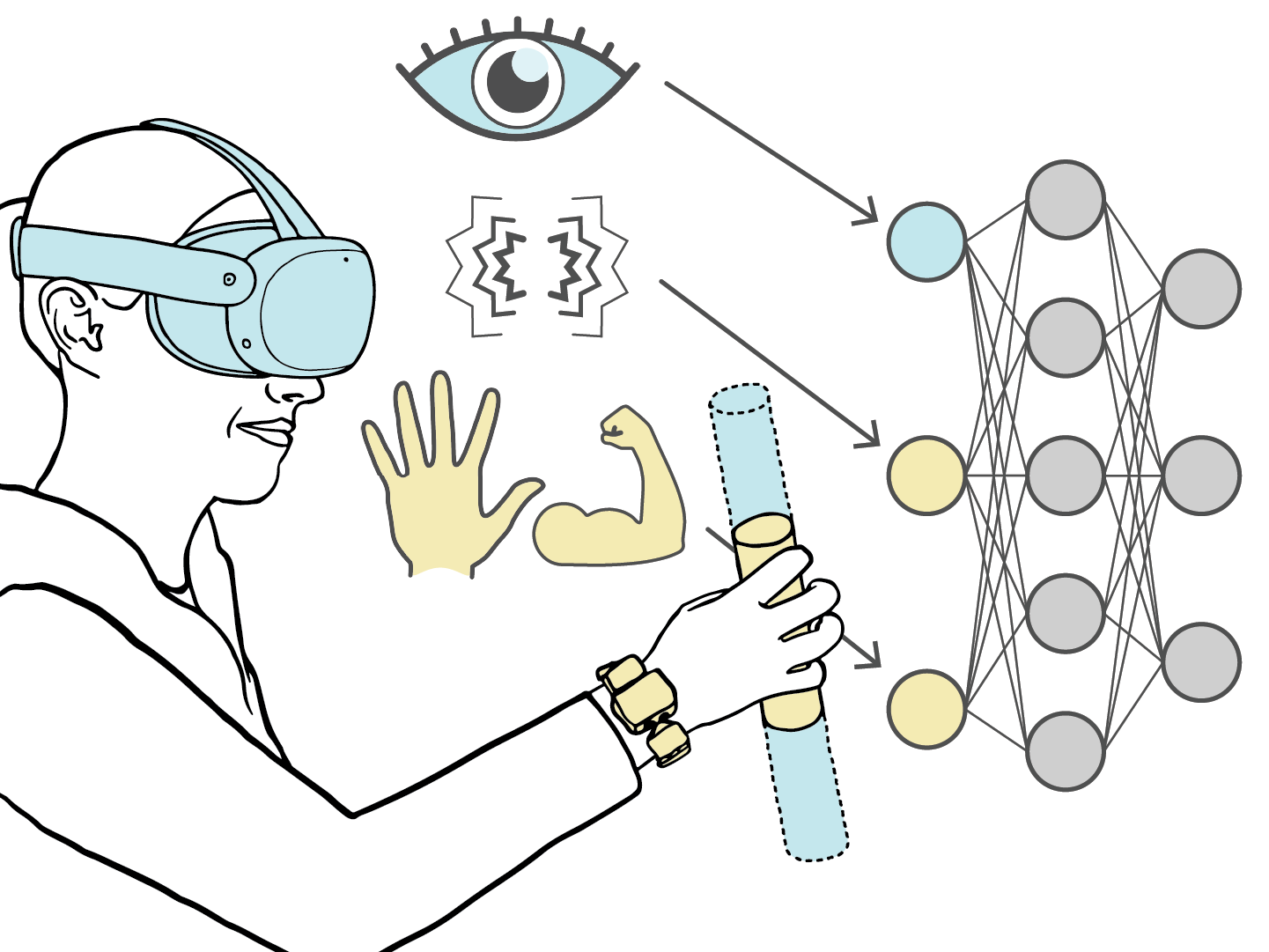
Sensory Congruence & Conflict
In virtual and augmented environments, what people see and what they feel often disagree. We study how users adapt to these mismatches and build models that can predict perception from sensory interaction traces.
Mechanical Engineering / Human-centered robotics
MultisensOry Systems for Adaptive and Interactive Cognition. We design, model, and study interactive robotic systems that help people sense, act, and learn in richer ways.

MOSAIC develops multisensory interactive systems that adapt to how people perceive, learn, and act. The lab combines mechanical and wearable device design, psychophysics, computational modeling, and closed-loop control to build technologies that respond to human perception.
In virtual and augmented environments, what people see and what they feel often disagree. We study how users adapt to these mismatches and build models that can predict perception from sensory interaction traces.
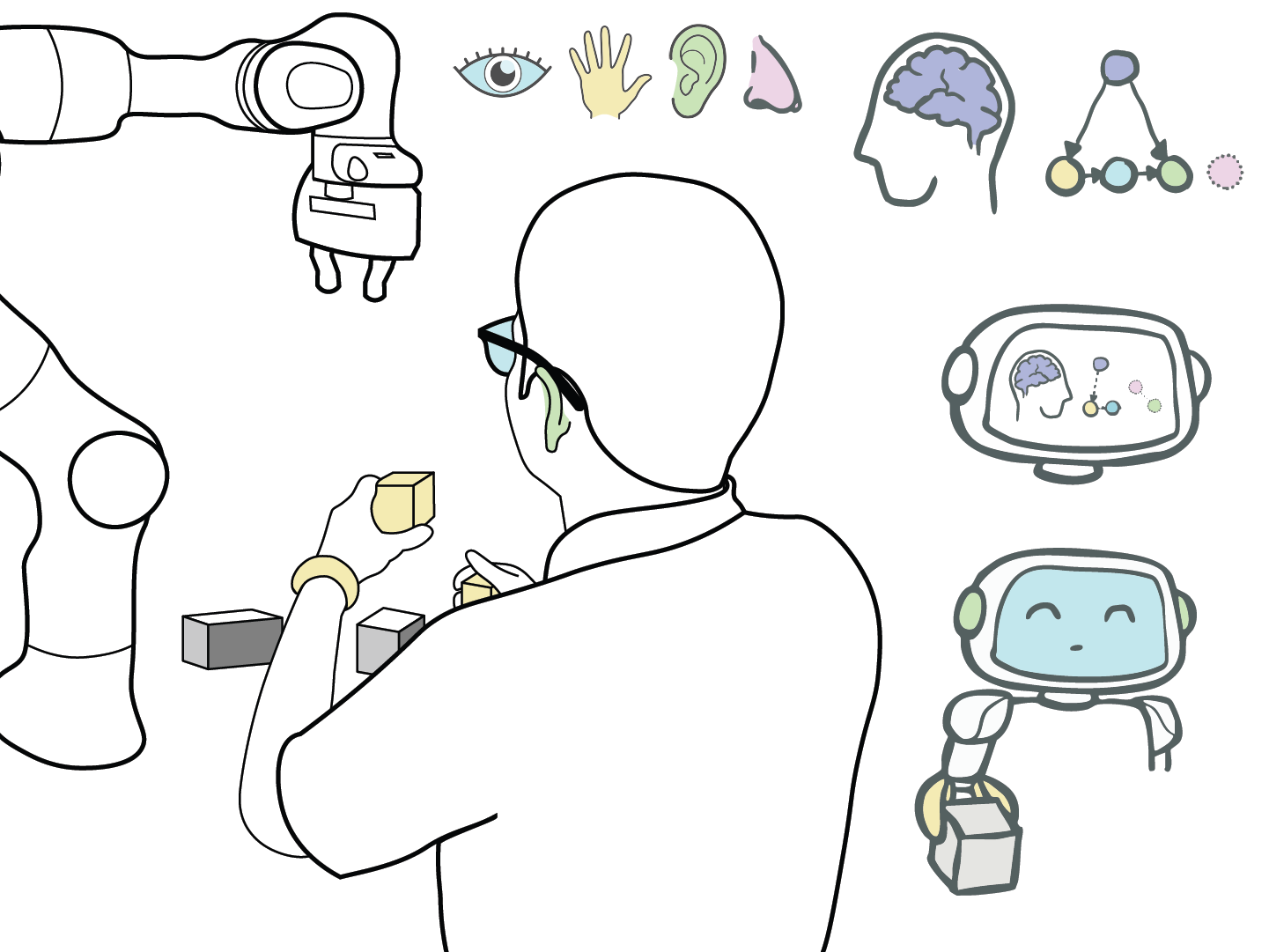
Physical collaboration depends on a shared sense of the task. We design robots and interfaces that infer how people weigh sensory information, then adapt motion and feedback so the human-robot pair stays perceptually aligned.
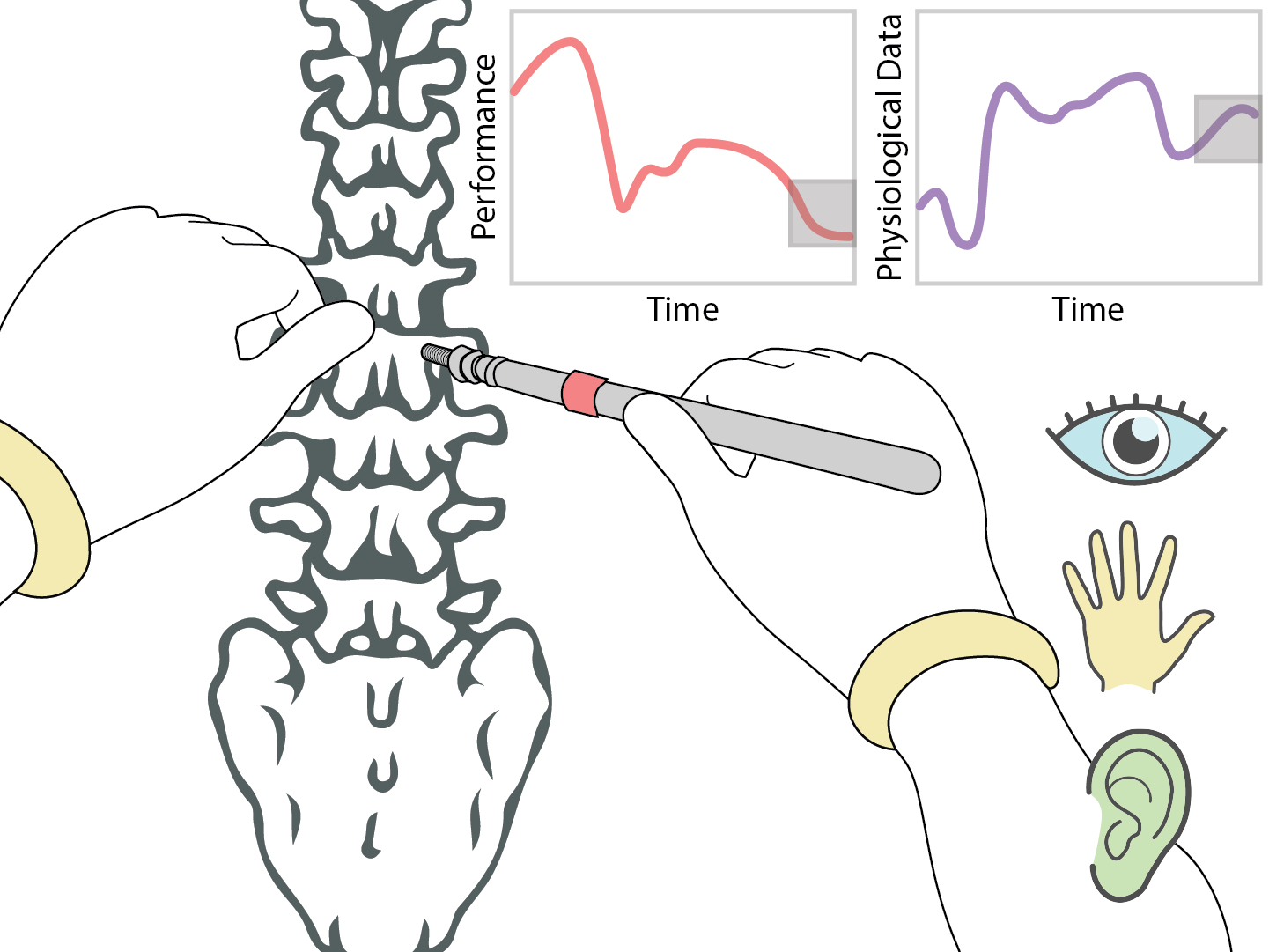
Training and rehabilitation systems need feedback that transfers beyond the simulator. We pair real-time sensing with adaptive visual, audio, and haptic cues to support surgical training, rehabilitation, and other high-stakes motor learning settings.